Why the playground feels overwhelming for some children is one of the most important questions parents and teachers can ask. For most children, the bell ringing for break time is the best sound of the school day. But for some children, that sound brings a very different feeling. Anxiety. Dread. The quiet wish that the classroom lesson would just keep going. If your child experiences playground anxiety at primary school, or if you support children who struggle with social overwhelm, this post is for you.
The playground is not always a joyful place. For children who experience autism, ADHD, anxiety, sensory overload or emotional regulation difficulties, break time can feel noisy, unpredictable and genuinely exhausting. Understanding why this happens, and what neurodiversity-aware playground support looks like, is the first step towards helping these children feel safer and more capable.

Ellie's Power
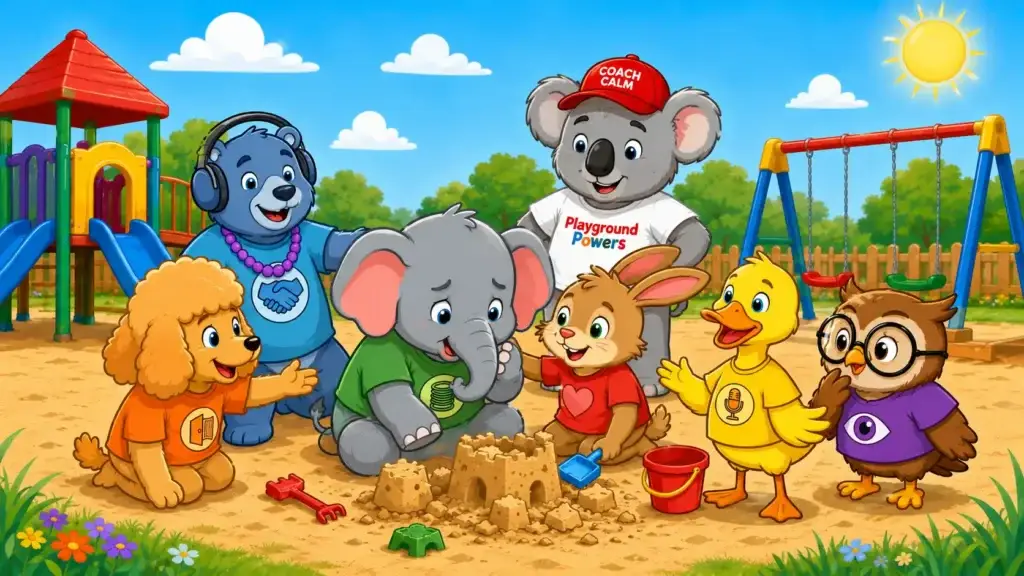
Ellie the Elastic Elephant helps children understand what it feels like when plans change unexpectedly, and how to adapt without falling apart. For children who struggle with flexibility and social overwhelm on the playground, Ellie's story gives them a framework they can actually hold onto.
Why the Playground Feels Overwhelming: What Children Are Up Against
Unlike the classroom, the playground has no structure. There is no timetable, no teacher directing what happens next, no clear script for how the next twenty minutes will unfold. For children with ADHD, autism or sensory processing differences, this lack of predictability alone can trigger significant anxiety at primary school.
Instead, children are expected to navigate all of this at once, with no adult standing beside them guiding each step:
- Joining games that have already started
- Reading other children's body language and tone
- Negotiating rules that keep shifting
- Coping with losing or being told no
- Solving conflicts quickly, often without an adult nearby
- Managing emotions while keeping up with everyone else
- Recovering fast when things go wrong
That is a complex set of demands, all arriving at once, in a noisy and unpredictable environment with no clear exit point. For many children this is manageable. For others, it is a source of genuine sensory overload and social overwhelm.
Different, not less.– Temple Grandin, autism advocate, author and professor
Children who experience autism, ADHD, anxiety or sensory processing differences are not choosing to struggle on the playground. Their brains and nervous systems are working hard in an environment that was not designed with them in mind. That is not a character flaw. That is a developmental reality that deserves compassion and practical neurodiversity support.
Children in Australia are estimated to have a developmental condition such as autism, ADHD or a related diagnosis, many of whom find unstructured social environments like the playground particularly challenging to navigate.
What Playground Anxiety and Sensory Overload Can Look Like in Children
Social overwhelm on the playground does not always look like obvious distress. It can be quiet, inward and easy to miss. Children experiencing playground anxiety or sensory overload at primary school might:
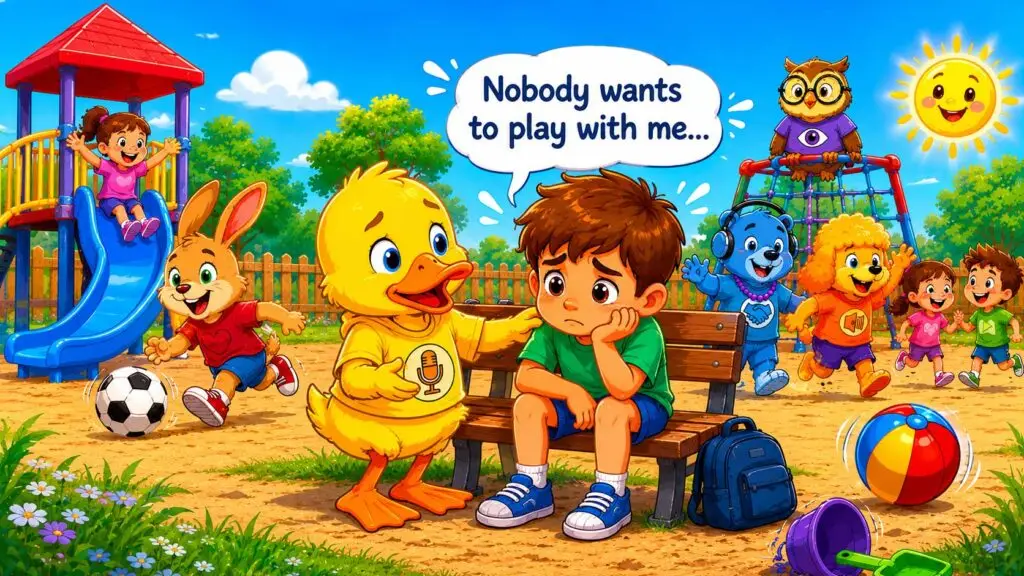
- Avoid joining in and choose to play alone or stay close to adults
- Walk away from games without explanation
- React strongly to what appears to be a small problem
- Struggle with flexibility when games suddenly change
- Feel exhausted after break time, even if nothing obviously went wrong
- Misread social situations and respond in ways that confuse other children
None of these behaviours mean a child is bad at friendships or does not want to connect. They are often signs that the child is still developing the skills and strategies needed to navigate complex group play, and that the environment itself may need adjusting alongside those skills.
The goal is not to make children perfect socially. The goal is to help children feel safer, calmer and more capable navigating social moments over time.
Neurodiversity Playground Support: What Actually Helps
Children who find the playground overwhelming benefit most from neurodiversity-aware support that is practical, clear and compassionate. Telling a child to "just join in" or "try harder" rarely helps with social overwhelm. What does help is breaking social situations down into smaller, more manageable steps.
Effective playground support for children with ADHD, autism or anxiety often includes:
- Social stories that slow down confusing situations and make them easier to understand
- Visual supports that help children prepare for what might happen at break time
- Emotional regulation tools to use before going outside and during play
- Role play that lets children practise social moments in a safe, low-stakes space
- Characters and stories that make social learning memorable and easy to recall in the moment
In the Playground Powers program, Woo-Woo the Watchful Owl helps children tune in to how others might be feeling, making social situations feel a little less unpredictable. When children have language for what they are experiencing and practical tools they can reach for, confidence begins to grow.
Discover how Playground Powers helps children who experience playground anxiety and sensory overload feel safer, calmer and more capable, step by step.
Join the WaitlistPlayground Confidence Can Be Built
The playground does not have to be a place of stress and dread. With the right neurodiversity-aware support, many children who find the playground overwhelming can begin to navigate it with greater confidence over time. Not perfectly. Not without any difficulty. But with more tools, more language and more belief in themselves.
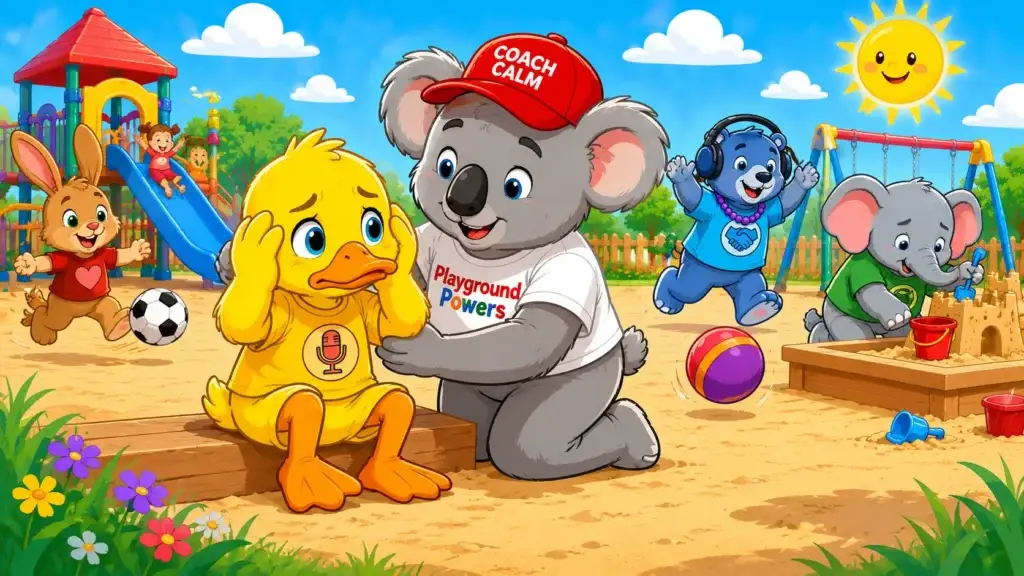
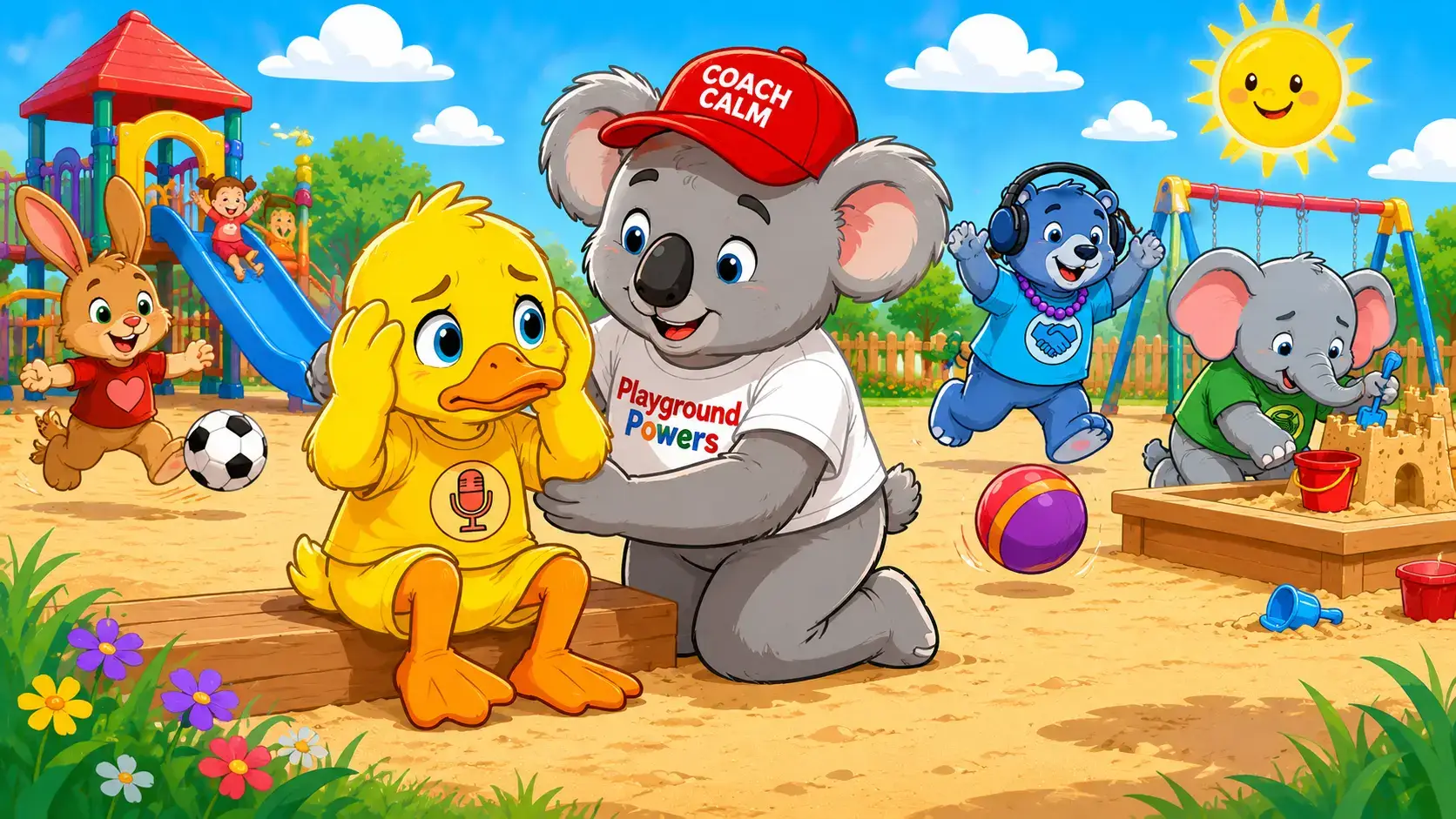
Because playground confidence is not something a child either has or does not have. It is something that grows. And every child, including yours, deserves the support to grow it. Take a look at the Playground Powers characters to see how story-based learning can make that growth feel safe and achievable.
Is It Normal for Children With ADHD or Autism to Experience Social Overwhelm at School?
Yes, and it is very common. The playground is one of the most demanding social environments in a child's day. For children with ADHD, autism or sensory processing differences, the noise, unpredictability and lack of structure can make playground anxiety a daily reality. This does not mean they cannot learn to navigate it. It means they need more explicit, compassionate support to do so, and that early neurodiversity playground support makes a significant difference.
Should I Tell the School My Child Is Struggling With Playground Anxiety?
Yes, always. Teachers and support staff can only help if they know what is happening. A brief conversation with the class teacher can open the door to useful adjustments, such as a structured activity area, a buddy system, or a quiet space for children who need a break from social pressure. Schools want to help; they just need to know where the difficulty lies.
What Can I Do at Home to Help With Sensory Overload and Social Overwhelm?
Practising social scenarios at home in a calm, low-stakes way makes a real difference. Role play common playground situations, read social stories together, and talk through what happened after difficult days without pressure. Small, regular conversations build understanding over time. You can also explore the thinking behind Playground Powers for a structured approach to building these skills at home.
Ready to give your child the tools, language and confidence to navigate the playground with more ease? Join the Playground Powers waitlist and be the first to know when we launch.
Join the Waitlist