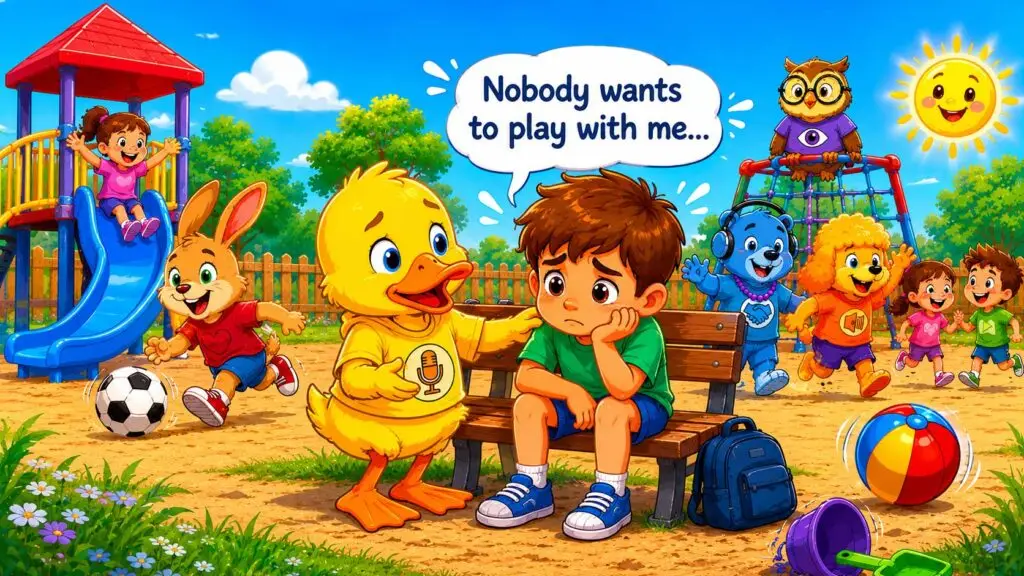
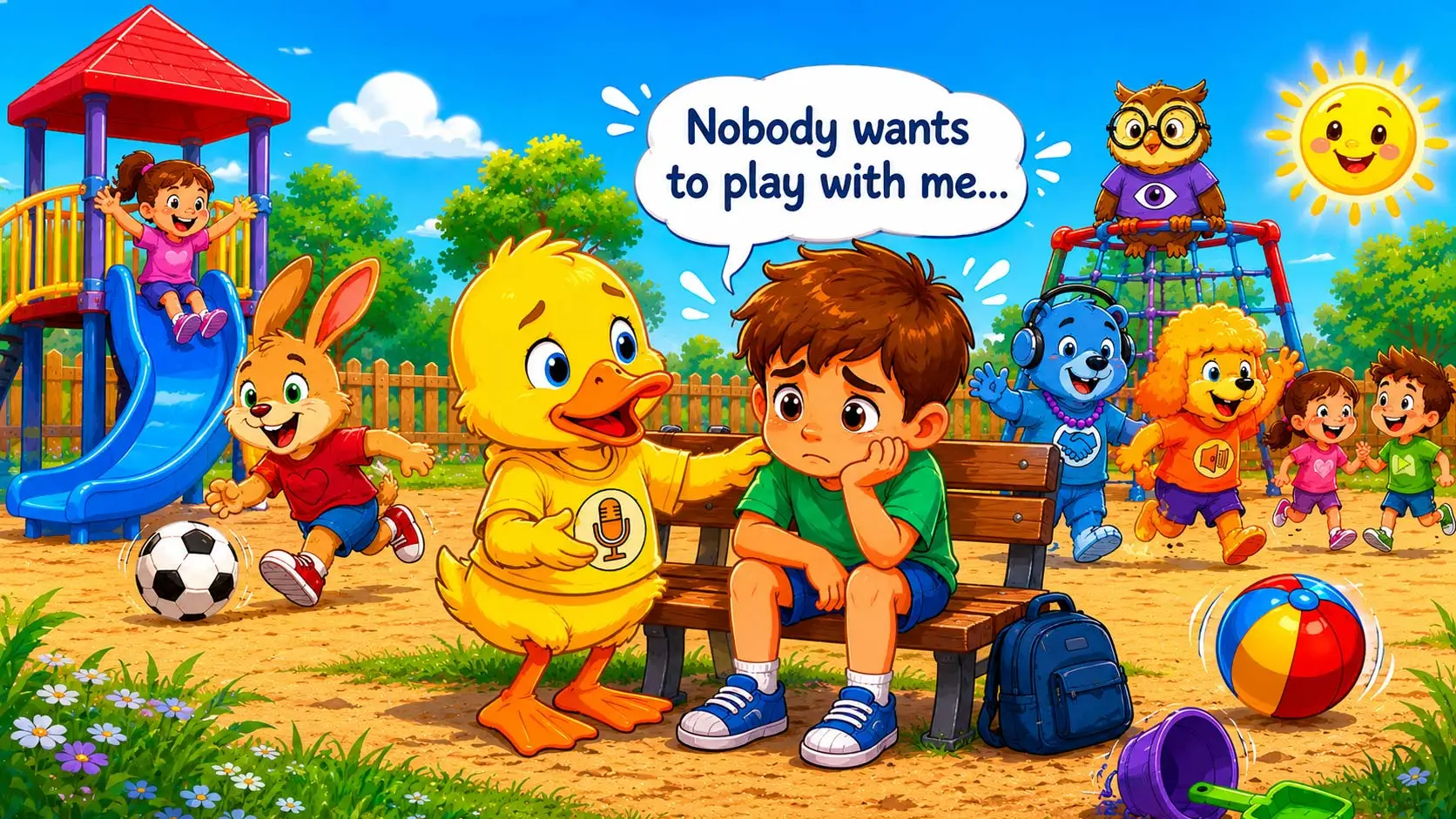
Few sentences are harder for a parent to hear. When your child comes home with those words, the instinct is to fix things immediately, to call the school, to coach them on exactly what to say, to promise tomorrow will be better. But before jumping to solutions, there is something more important to do first, and it makes all the difference.
Playground challenges are more common than many parents realise. Almost every child struggles at some point with joining in, reading social situations, handling conflict, coping with rejection, or maintaining friendships. That does not make it any less painful when it happens to your child. But it does mean you are not alone in navigating it, and neither are they.

Sparky's Power
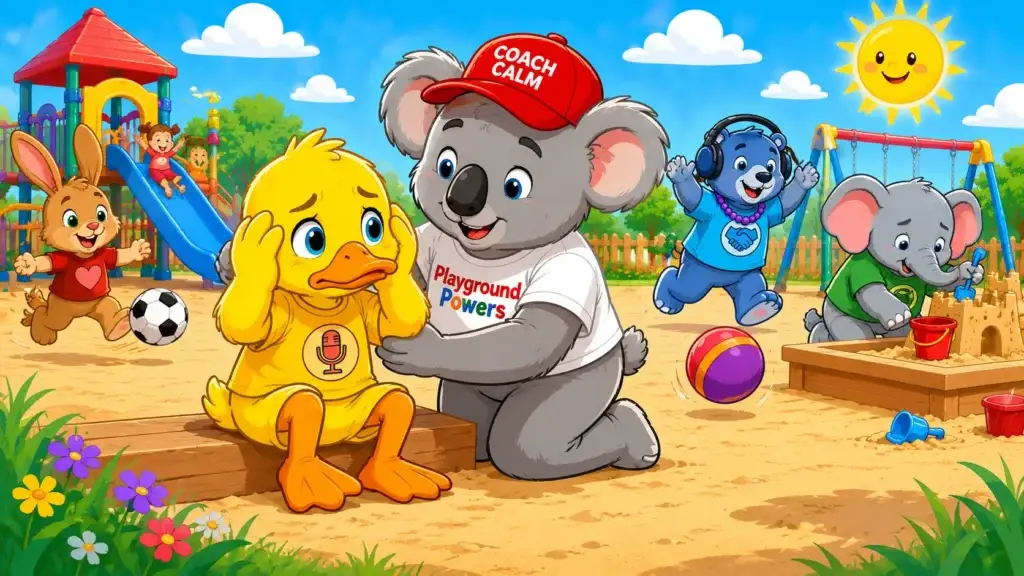
Sparky the Speak-Up Duck helps children find the words to ask for what they need and to reach out to others with confidence. When a child feels invisible on the playground, Sparky's power gives them a place to start.
Start By Listening, Really Listening
The single most helpful thing you can do when your child shares something painful is to slow down and make them feel truly heard. Not fixed. Not reassured straight away. Just heard.
Feeling understood before being given advice is not just kindness. It is what helps children feel safe enough to keep talking to you when difficult things happen. Try starting with words like:
- "That sounds really hard. Tell me what happened."
- "I can see that really hurt your feelings."
- "It is upsetting when we feel left out. I am glad you told me."
Children who feel heard are children who keep sharing. And children who keep sharing are children we can keep helping.
Gently Explore What Actually Happened
Once your child feels supported, you can begin to gently explore the situation together. Not to interrogate, but to understand. Sometimes children are missing pieces of context about a social moment that a calm conversation can help to fill in.
Some helpful questions to try:
- "What were the other kids doing when you wanted to play?"
- "Did you try to join in? How did you try?"
- "How did your body feel? Where did you feel it?"
- "What thoughts were going through your head?"
Gently unpacking what happened can reveal where the difficulty actually lies, whether it was a moment of exclusion, a misread social cue, or simply not knowing how to ask to join in. Each of these has a different path forward.
Children experience meaningful social difficulties at school, including trouble joining games, managing conflict, or understanding social cues, according to research in social-emotional learning and child development.
Build Skills, Not Just Reassurance
Once your child feels supported and you have a clearer picture of what happened, the next step is skill-building. Not fixing friendships overnight, but building the practical skills that help your child navigate these moments better next time.
You can begin practising at home in low-stakes, playful ways:
- How to ask to join a game using friendly, clear language
- What to do when someone says no, without shutting down or giving up
- How to cope with disappointment without lashing out
- How to repair a friendship after a falling out
- Simple calming strategies for big feelings in the moment
Connection is why we are here. It is what gives purpose and meaning to our lives.– Brene Brown, The Gifts of Imperfection
When children feel genuinely connected to others, even in small and imperfect ways, it changes everything. Your role as a parent is not to engineer perfect friendships. It is to help your child build the skills and the resilience to keep reaching out, even when it feels hard.
Discover how Playground Powers gives children the language, confidence and step-by-step tools to navigate friendships and find their place on the playground.
Join the WaitlistOne Hard Day Is Not the Whole Story
One difficult playground moment does not define who your child is. It does not mean they are unlikeable, incapable of making friends, or destined to struggle. Children build social confidence gradually, through practice, encouragement, small wins that build on each other, and adults who believe in them and keep helping them try.
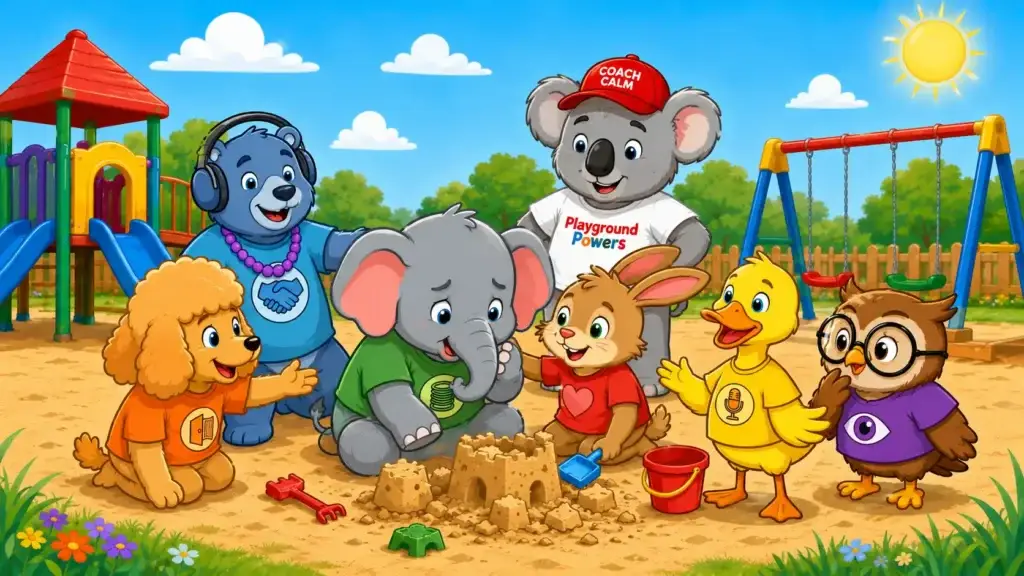
The Playground Powers program was designed with exactly this in mind. Through guided stories and memorable characters, children learn practical, repeatable skills they can use in real social moments, in the classroom, on the playground, and beyond.
What If My Child Is Being Excluded on Purpose?
Intentional exclusion does happen, and it is worth taking seriously. Start by speaking with your child's teacher so they are aware and can observe what is happening at break time. In the meantime, keep validating your child's feelings and focus on building their confidence and social toolkit at home.
How Do I Know If This Is a Phase or Something More?
Most children go through periods of social difficulty, and many resolve with time and gentle support. If your child's playground struggles are ongoing, affecting their willingness to attend school, or causing significant distress, it is worth speaking with their teacher or a practitioner who supports social-emotional learning. Early support makes a real difference.
Can I Teach Social Skills at Home?
Absolutely. Role play, social stories, and calm conversations after difficult moments are all powerful ways to build social understanding at home. Take a look at how the Playground Powers program works for ideas you can bring into your everyday routine.
Ready to give your child the tools they need to feel confident, connected and capable? Join the Playground Powers waitlist and be the first to hear when we launch.
Join the Waitlist